
Student Feature: Research and mentorship create hands-on learning opportunities at YSU
FEATURE STORY
Story by: Aicha Sawaneh, Professional Communication Graduate Student
Research opportunities at Youngstown State University allow students to move beyond the classroom and engage in hands-on projects while working closely with faculty mentors across disciplines.
Through research and casework experiences, YSU students gain technical skills, professional development and opportunities to present their work at local and national conferences — experiences that help prepare them for graduate study and future careers.
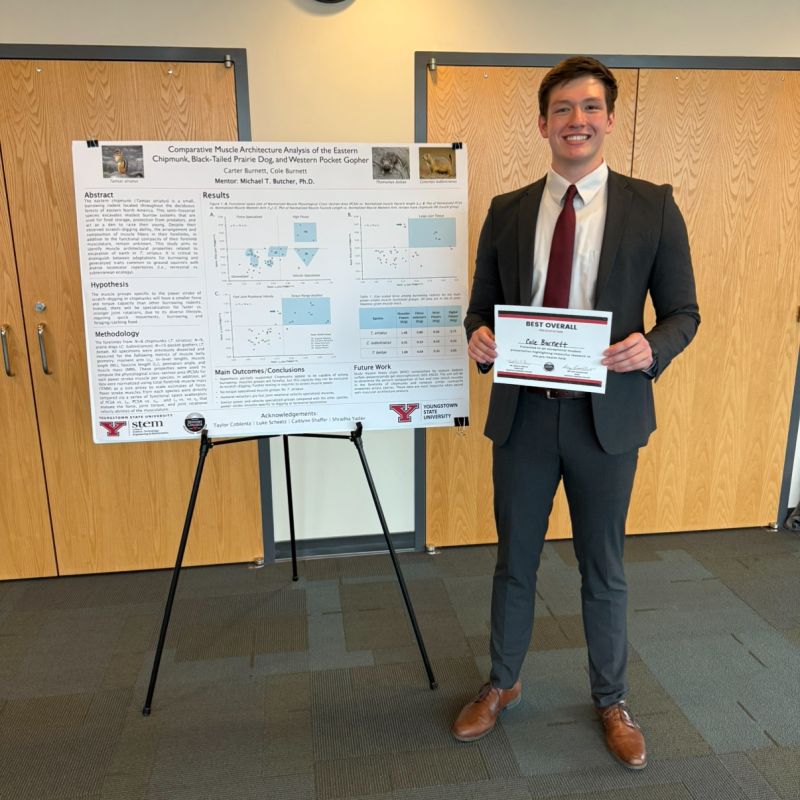
Cole Burnett — Biology
One of those students is Cole Burnett, a recent Youngstown State University graduate whose research in biomechanics reinforced his interest in pursuing a career in medicine.
Burnett, a biology major with a chemistry minor, graduated from YSU last month after completing research in the biomechanics lab under Michael Butcher, professor of chemical and biological sciences. His work focused on a comparative muscle architecture analysis of burrowing rodents, including the eastern chipmunk, black-tailed prairie dog and western pocket gopher.
The project examined how differences in lifestyle and environment influence muscle structure and function.
“We were comparing species that range from more fossorial, to semifossorial, to more arboreal,” Burnett said. “The goal was to see whether differences in how these animals live and move can be connected to differences in their morphology.”
Burnett said his interest in the project was sparked by a growing fascination with the biomechanics side of anatomy, as well as by mentorship both inside and outside the lab. His older brother, a graduate student at the time, also worked under Butcher and helped introduce him to the research environment.
“I really wanted to see the biomechanics side of anatomy,” Burnett said. “Having my brother as a mentor, along with Dr. Butcher, made the transition into research really smooth.”
Burnett, who plans to pursue a career in medicine, said research played an important role in preparing him for the next stage of his academic journey. He sought out the opportunity independently, not through a required class or capstone.
“I went out of my way to meet with Dr. Butcher,” Burnett said. “I even sat in on an anatomy lecture one time even though I was not enrolled in that class. That conversation afterward really sparked my interest, and everything grew from there.” Beyond technical skills, Burnett said mentorship played the most significant role in shaping his experience.
“The research itself was great, but having a mentor like Dr. Butcher was the biggest part,” Burnett said. “He is one of the best teachers I have ever had. Having someone with that level of knowledge guiding you makes all the difference.”
Burnett presented his research at multiple conferences, including the YSU Honors Pre-Health Symposium, where he received the award for best overall presentation. He also presented at the National Collegiate Honors Council conference in San Diego — an experience he credits to the support of YSU’s Honors College.
“Not every honors college supports students the way YSU does,” Burnett said. “They listened when students wanted more opportunities to present research, and they helped make it happen.”
Through these experiences, Burnett said he gained both technical and professional skills, including laboratory techniques, data analysis, communication and organization.
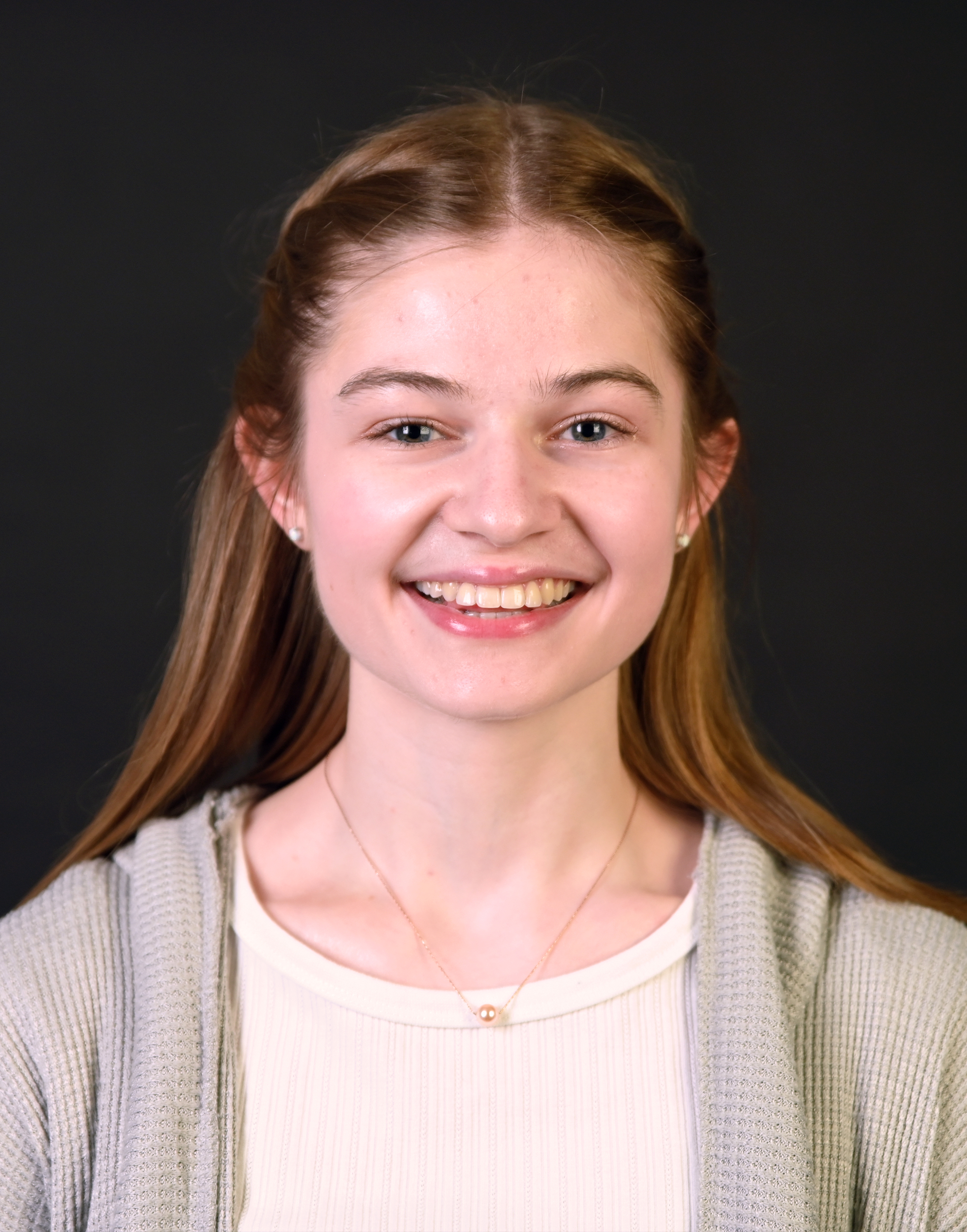
Katelyn Obermiyer — Public and Professional Writing
For Katelyn Obermiyer, research became a way to combine academic writing with a strong commitment to student health and well-being.
Obermiyer, a junior majoring in public and professional writing, conducted a research-based recommendation report examining e-cigarette use among Youngstown State University students. Her project focused on student perceptions of vaping, patterns of use and potential strategies to support prevention and cessation on campus.
“I care a lot about the health of students at YSU,” Obermiyer said. “I wanted to see how people think about vaping, how that affects use and what supportive, educational approaches could actually help students who want to quit.”
The project was developed through her Writing With Data course, which challenged students to identify a local issue and propose evidence-based solutions. Obermiyer said she chose to focus on vaping after observing how common e-cigarette use appeared across campus.
Rather than recommending strict enforcement measures, Obermiyer aimed to create interactive and supportive solutions. Her recommendations included a campuswide vaping awareness event with educational tables, alternatives to vaping, accountability-centered resources and opportunities for students to learn about quitting in a nonjudgmental environment.
“I wanted it to be creative and supportive,” she said. “Not something that feels punitive, but something that actually helps people.”
Obermiyer served as the primary researcher and writer on the project. She designed and distributed a student survey through mass email and the YSU app, analyzed the results and wrote the final report over the course of the fall semester with guidance from her faculty mentor, Diana Awad Scrocco, professor of english.
Her survey collected 36 responses, with nearly half of respondents reporting some level of interaction with e-cigarettes. While most respondents believed vaping was harmful, many also felt YSU could do more to support prevention and education.
Applying research to a real-world issue made the project especially meaningful, Obermiyer said.
“I felt like I was actually making a difference,” she said. “That’s what made the work so motivating.”
Obermiyer recently submitted her research for consideration at an upcoming academic conference and said the experience helped her build analytical, research and professional writing skills that will extend far beyond YSU.
“If you care about something and want to make change, go for it,” she said. “YSU has faculty who want to support you. Take that opportunity and see what you can do with it.”
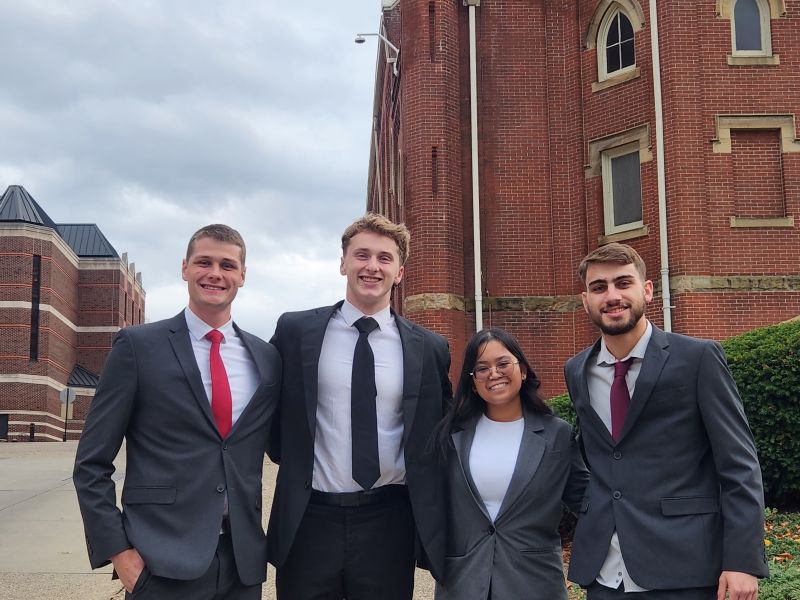 Williamson College of Business Administration — Supply Chain Case Competition
Hands-on learning also extends beyond traditional research settings.
Four Williamson College of Business Administration students gained industry experience this spring by representing Youngstown State University at the 2025 Pittsburgh Supply Chain Management Academic Case Competition at Duquesne University.
Aidan Gray, Quentin Pew, Rosetti Johnson and David Shannon were selected through a competitive application process to participate in the regional competition, where teams analyzed a real-world supply chain challenge presented by Helmet Aerospace, a Youngstown-based manufacturer.
The team evaluated the company’s sourcing strategy for a high-purity binding agent used in aerospace manufacturing, developing data-driven recommendations to improve supplier selection, cost efficiency and long-term sustainability.
“It was the first time I really saw what supply chain problems look like in the real world,” said Gray, a senior majoring in supply chain management who is also pursuing certificates in business analytics and enterprise resource planning.
The students examined global sourcing options, political and ethical considerations, shipping timelines and long-term cost projections. Faculty mentors Alina Marculetiu and Jeong Hoon Choi helped prepare the team for the competition.
“There was no coaching during the competition — it was completely on us,” Gray said. “That was intimidating at first, but it pushed us to really trust our preparation and our teamwork.”
Gray said the experience strengthened his analytical skills, presentation confidence and understanding of how classroom concepts translate into professional decision-making.
Bitonte College of Health and Human Services — Dietetics Research
A similar emphasis on applied learning and faculty mentorship is shaping undergraduate research in Youngstown State University’s Bitonte College of Health and Human Services.
Dietetics students Martina Lemos, Lily Vari-Coppola, Anshu Guragain and Leah Barron are studying how college students engage with nutrition and fitness content on social media, including influencer credibility and behavioral impact.
The project is part of the research requirement for YSU’s Didactic Program in Dietetics and is conducted under the supervision of Zara Rowlands, professor of dietetics programs and director of the Didactic Program in Dietetics. After receiving Institutional Review Board approval at the end of the fall semester, the students began collecting survey data.
“Social media is one of the first places students go for wellness advice,” Lemos said. “Whether it’s diet trends, workout routines or supplements, that kind of content is constantly being pushed online.”
Rather than dividing responsibilities, the team collaborates throughout the research process.
“It’s very collaborative,” Lemos said. “We work together on everything, which really reflects how research works in real life.”
The experience has allowed students to apply classroom knowledge while developing professional skills.
“Research teaches you how to work with others, meet deadlines and communicate clearly,” Lemos said. “Those skills are just as important as the technical side.”
Although the study is ongoing, the students hope to present their findings through campus research opportunities and academic forums.
Through experiences like these, Youngstown State University continues to connect classroom learning with real-world application, preparing students to critically evaluate information, collaborate professionally and contribute meaningfully to their fields beyond campus.
